
Reviewed for the live Early Access build
Dimraeth Combat Systems Guide
Dimraeth's combat rewards measured inputs. Long attack strings feel tempting, but the safer rhythm leaves enough stamina to answer the enemy's next move.
The stamina loop#
Physical offense and defense compete for the same attention. A good default is to finish a short attack sequence, read the enemy, and move before committing again.
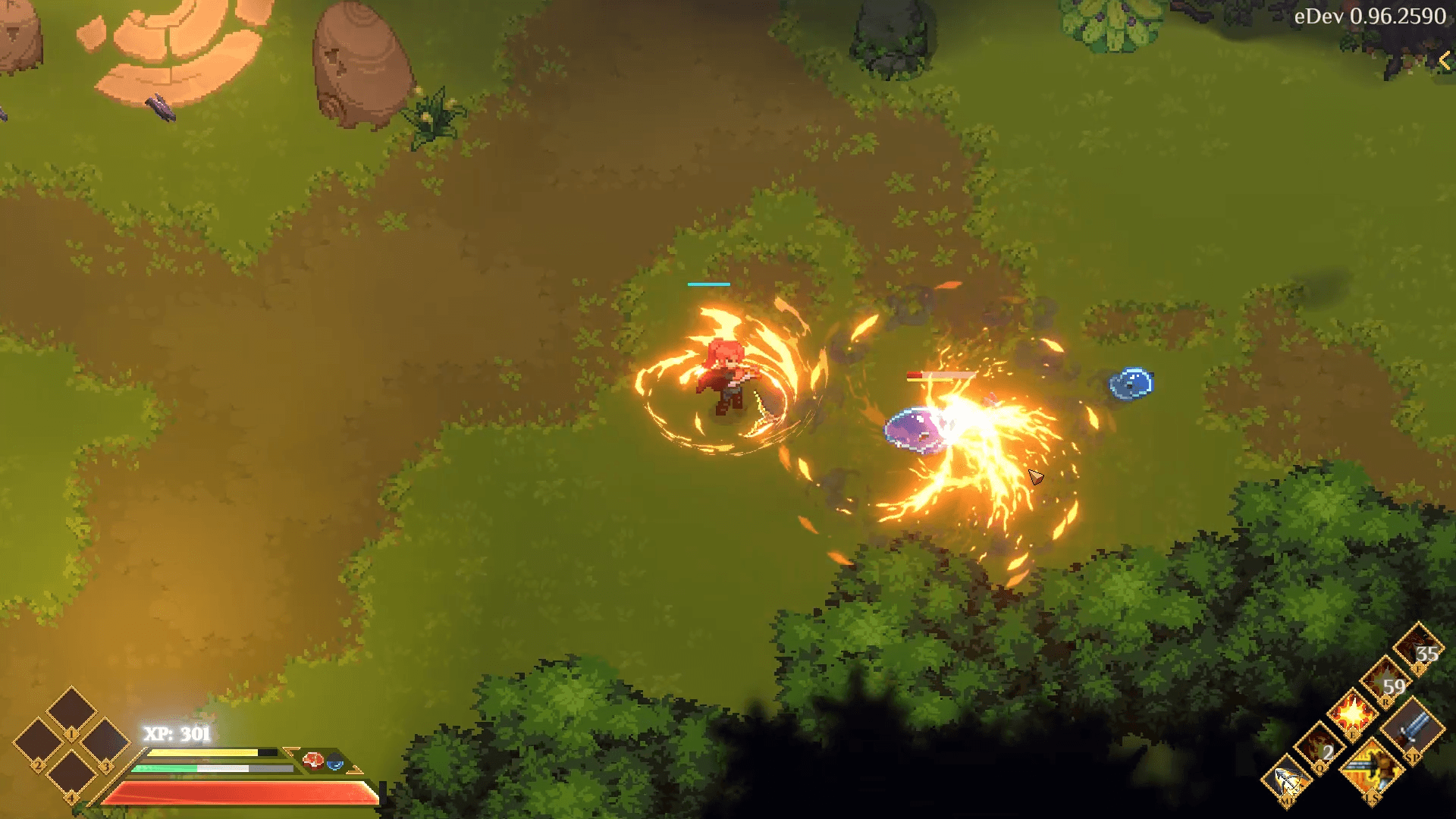
- Do not empty stamina into a guarded target
- Dodge when distance matters
- Block or parry only when the timing is understood
Concentration and five spells#
Spells broaden the answer set without replacing movement. Build the five slots around situations: a dependable cast, a control tool, a burst option, a movement or escape tool, and a flexible fifth choice.
- Keep at least one low-risk cast
- Avoid five spells that solve the same problem
- Rebuild the bar before a boss if the arena changes the fight
Poise, status, and openings#
The reviewed community guide describes stagger and status pressure as ways to create safer damage windows. Exact thresholds may change, so read the visible reaction and status feedback instead of relying on a fixed number.
- Apply pressure, then confirm the reaction
- Use control to reset a crowded fight
- Treat exact buildup values as version-sensitive
Control groups before chasing damage#
Crowded fights punish tunnel vision. Move until enemies approach from a similar direction, then use terrain, range, or a control spell to reduce simultaneous pressure. Attacking the nearest target can be correct when it keeps an escape lane open, even if another enemy has less health.
Watch what interrupts your own actions. If repeated hits stop a cast or lock the character in place, create distance before trying the same input again. The solution is often a better opening, not a longer combo.
- Keep one side of the arena open
- Pull enemies into a readable angle
- Control first when several attacks overlap
- Restart the action after creating space
Diagnose a failed fight#
Running out of stamina points to attack length or defensive timing. Running out of concentration points to spell selection or cast frequency. Taking unavoidable-looking damage usually means the tell was read too late or the character was trapped by positioning. Name the resource or decision that failed before changing the build.
- Stamina failure: shorten the sequence
- Concentration failure: reduce redundant casting
- Position failure: preserve an exit
- Damage failure: confirm a safe punish window
Continue through Combat#
Use the focused page that matches the current problem.
FAQ#
Why do I keep getting caught after attacking?
Shorten the attack sequence and leave stamina for the enemy's response.
Should every spell be damage?
A mixed bar is safer because control, movement, and recovery can create damage opportunities.